
Essential insights and practical actions to meet traveller expectations and future-proof your travel programme


Scroll down for trends
The trends
When your team travels for work, you want each trip to be beneficial to your business, as well as satisfying for your travellers. Meeting these dual requirements takes a combination of smart strategy and technology.
In this report, we cover the latest business travel trends that directly address strategic ways of working and measuring success. Of course the impact of Gen Z and AI on just about everything is included too.
Each trend features actionable points that you can incorporate now. We hope they inspire fresh thinking that helps lead to happier travellers, improved ROI, and a more effective business travel programme.

01. Gen Z leads the way
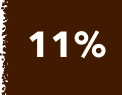
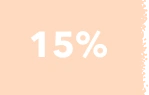
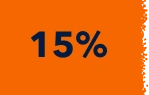
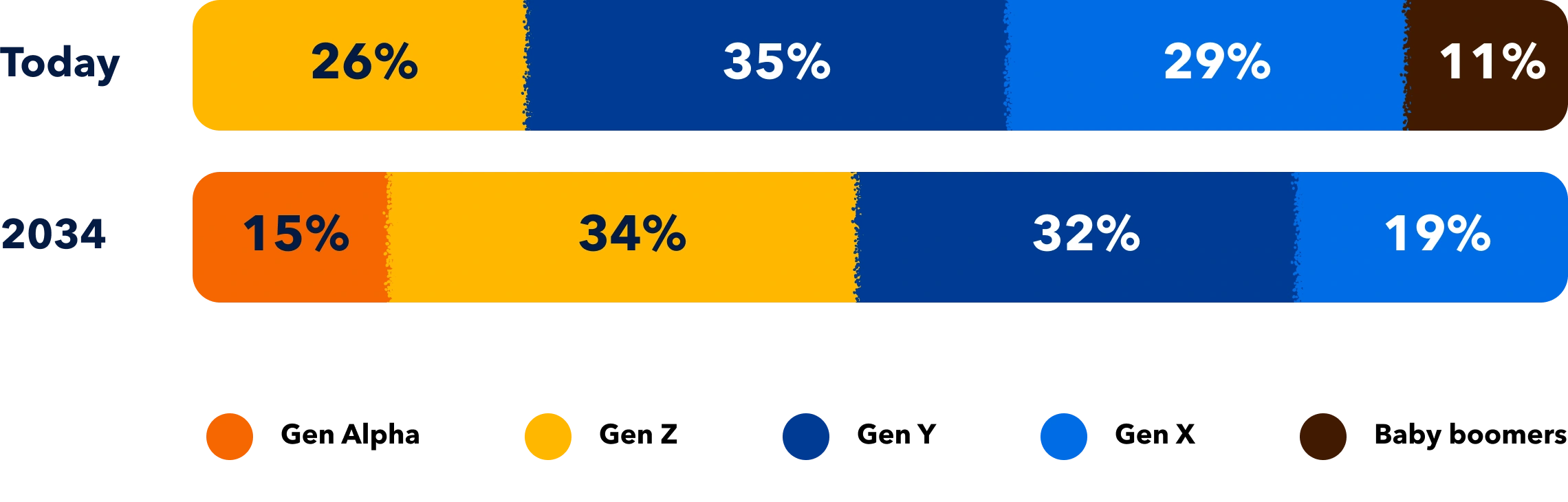
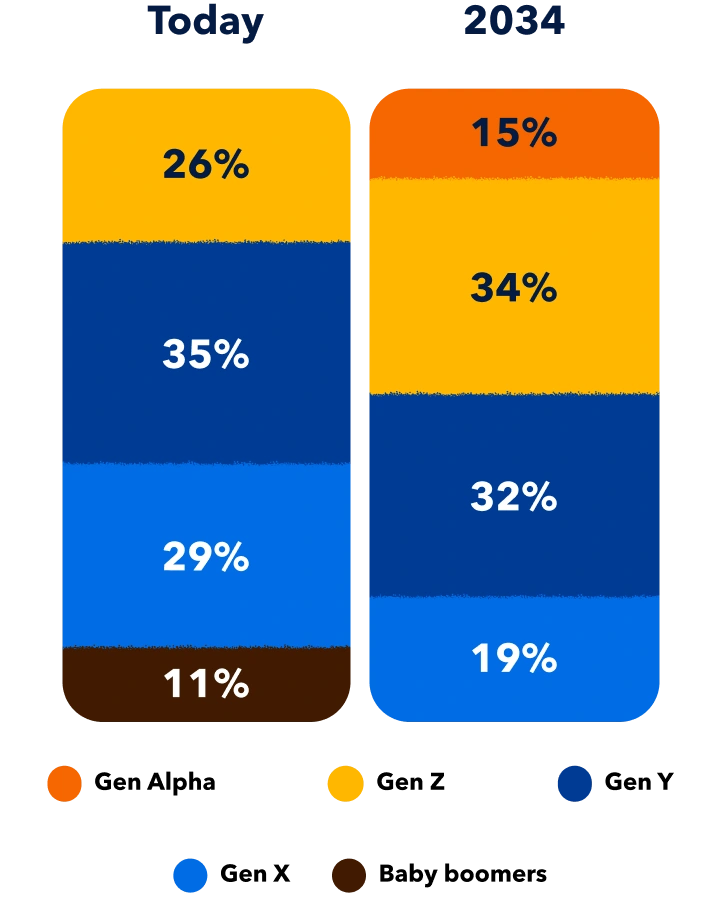
With Gen Z set to make up 34% of the global workforce by 2034,[1] this group is having an impact on the workplace that can’t be ignored.
Travel is important for Gen Z and often plays into their decision-making when selecting a job. In fact, over half say that a role that lets them experience other cultures is attractive,[2] and 70% look forward to travelling for work.[3]
Work-life balance and flexibility are also key. In regards to business trips, this generation wants to combine productivity with purpose and personal growth. [4]
When it comes to organising business travel, making online and mobile bookings is second-nature to these true digital natives. They have a good level of comfort with using AI-powered travel services, [5] and expect seamless bookings and personalised recommendations. Of course they also want easily accessible information about the business part of their trip and beyond.
While the impact of Gen Z is a trend all by itself, and one you can address, the group’s expectations create some of the other trends we cover in this report.
What Gen Z means for your business travel programme
- To meet work-life balance expectations, be transparent about travel frequency when you’re hiring.
- Let employees benefit from loyalty programmes and be sure they can access 24/7 support through a number of channels.
- Offer an intuitive, consumer-grade travel booking tool to increase programme compliance.
Today







2024

















02. Structured flexibility
When Gen Z and Millennials rank workplace flexibility as the top reason for staying in a job,[6] it’s a good idea to consider what kind of ‘flexibility’ your company can introduce in regards to business travel.
Many Gen Z workers are likely to extend business trips to enjoy leisure time too [7] – a combination known as a ‘bleisure’ trip. So travel policies that facilitate better work/life balance, even when travellers are away from home, are important.
Your business travel platform can also offer controlled flexibility if it gives your team the autonomy to book and manage their own work trips. They get the choice they want while helping you oversee and control costs.
What structured flexibility means for your business travel programme
- Offer remote work opportunities and the flexibility to extend business trips.
- Create a clear bleisure policy so your travel arrangers and individual travellers understand what’s acceptable when booking and extending a trip.
- Use a business travel booking platform that offers a wide range of choice and lets you assign roles so travellers can arrange their own trips and you don’t have to be in control of everything.

Benefits for companies
- Employee satisfaction
- Improved talent retention
- Team productivity
- Enhanced global presence

Benefits for employees
- Remote work experience
- Bleisure opportunities
- Work-life balance
- Autonomy
Benefits for companies
- Employee satisfaction
- Improved talent retention
- Team productivity
- Enhanced global presence
Benefits for employees
- Remote work experience
- Bleisure opportunities
- Work-life balance
- Autonomy

03. Working on wellness
Business travel carries a multitude of positive benefits: Fostering customer relationships, team building with colleagues, and developing new market opportunities, to name just a few. These outcomes undoubtedly contribute to employee satisfaction and accomplishment.
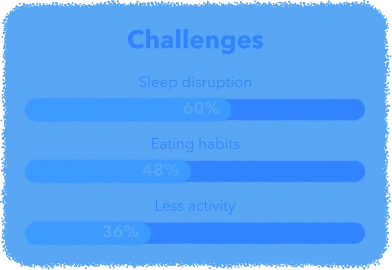
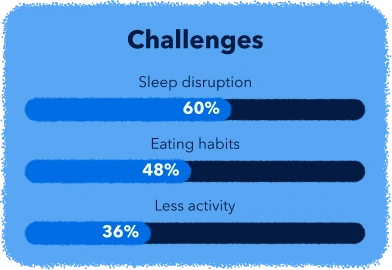
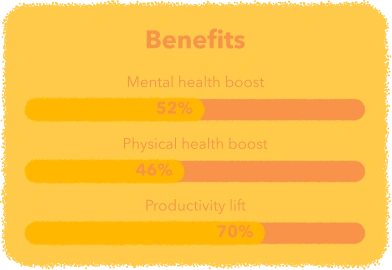
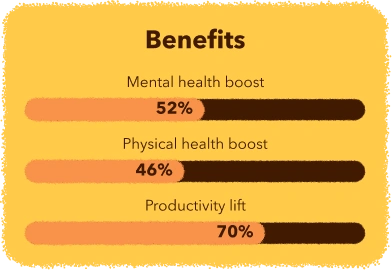
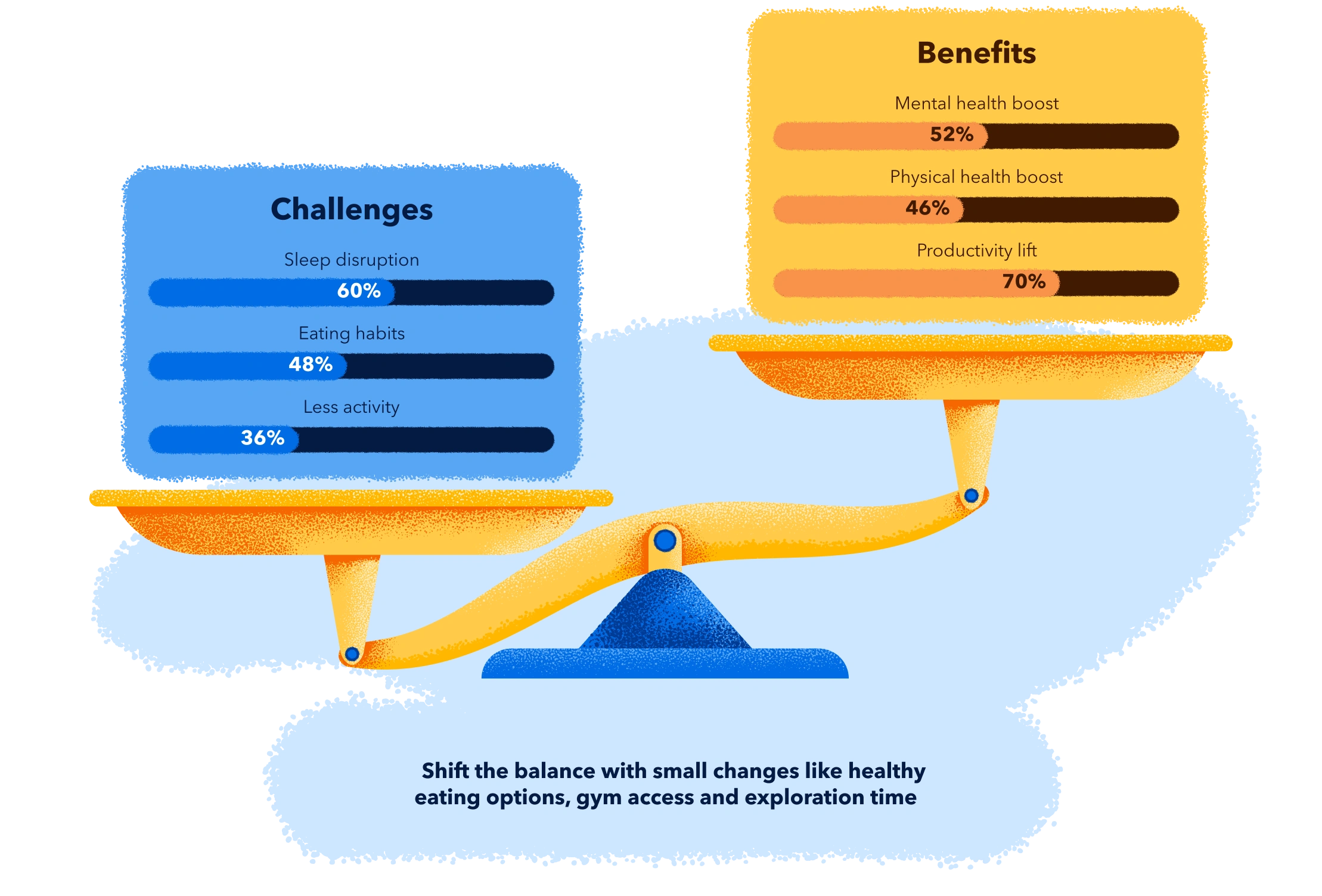
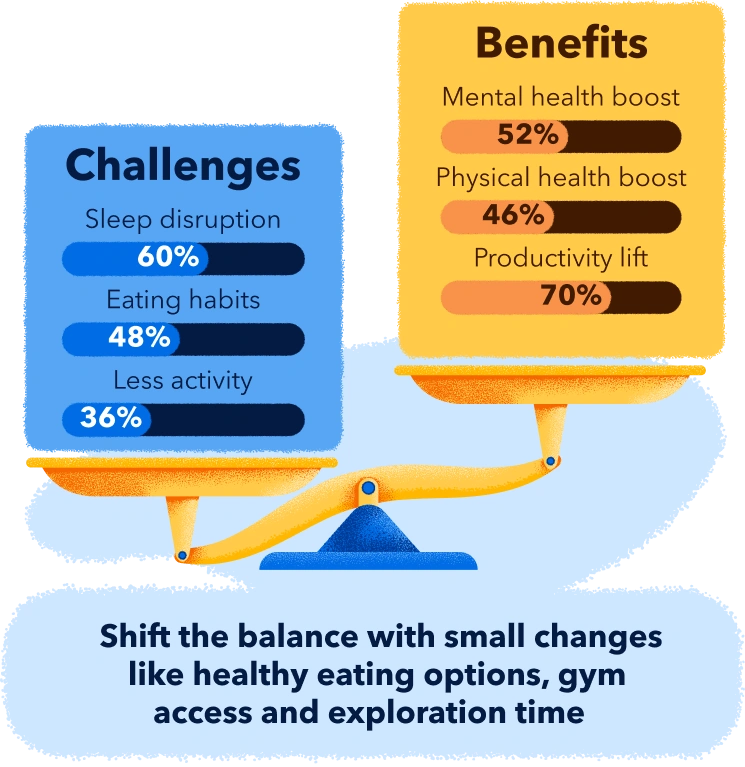
In fact, more than half of the travellers we surveyed say work trips boost their mental (52%) and physical (46%) health,[8] and 70% find them positive for productivity.[9] On the flipside however, travellers reported that things like disrupted sleep (60%) and changes in eating habits (48%) do take a toll on their wellbeing.
That’s why we’re seeing the trend of switched on business travellers looking for ways to unplug and seek calm and comfort amidst the work schedule. This balance can come from healthier food and fitness access, quiet rooms with home-like amenities, or leisure time before or after a work trip.
For business owners and travel arrangers, helping your travelling employees rest and recharge isn’t just good for morale, it’s good for ongoing loyalty, productivity and the bottom line.
What traveller wellbeing means for your travel programme
- Make rest part of the plan by encouraging travellers to choose flights and stays that allow proper rest, even if it means an extra night away.
- Prioritise wellbeing-friendly stays with quiet rooms, quality bedding, gyms and healthy dining. These small comforts can make a big difference.
- Let employees add personal days before or after trips to explore where they are. A morning walk through a new neighbourhood or a weekend extension to decompress can lead to fresh perspectives and renewed energy.
- After each trip, ask travellers how they feel physically and mentally, and use that insight to refine your policies.





04. Justifying the journey
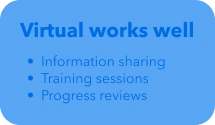
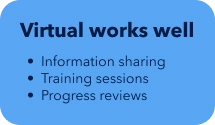
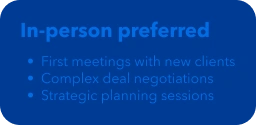
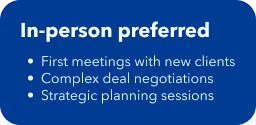
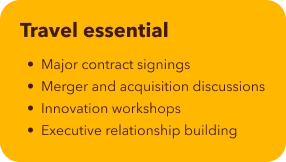
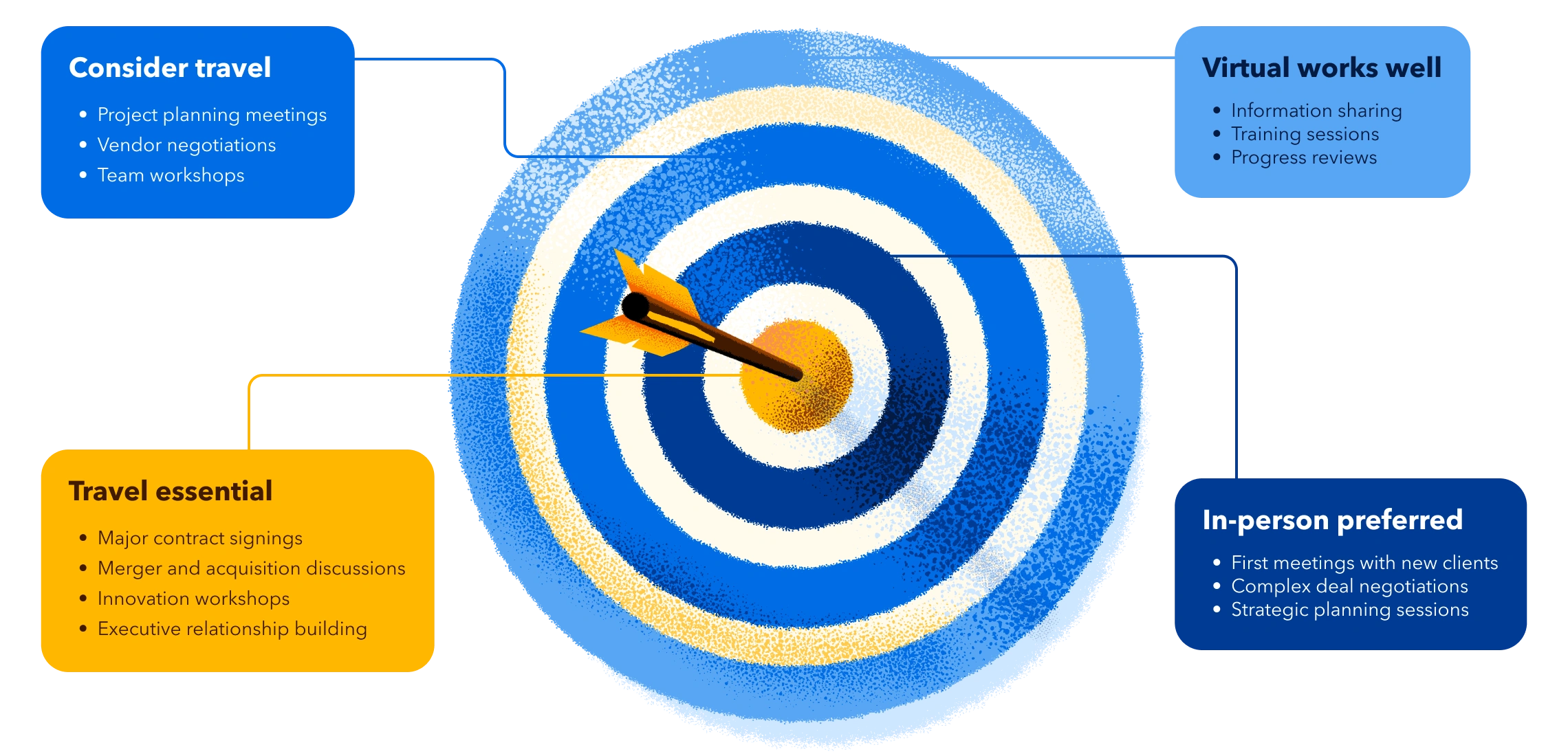
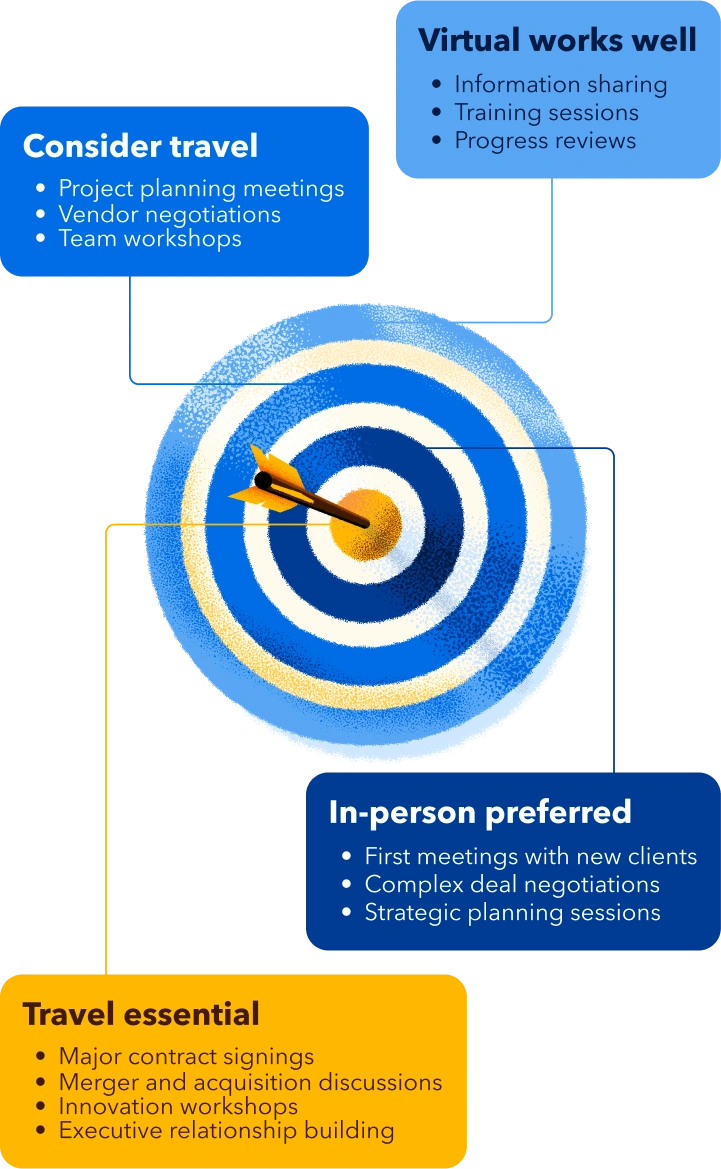
In this era of economic uncertainty, companies need a way to measure the value of in-person business trips, especially when so much can be done online instead. That’s where intentional travel comes in. You want to calculate real figures and metrics to determine whether a trip is necessary or if you can gain the same value another way.
When thinking about financial aspects, will the revenue generated by a face-to-face meeting be greater than the cost of the trip itself? Will things move quicker in person? If so, then budgeting for that time together is worth it.
Will face-to-face meetings improve client acquisition, retention and satisfaction? You can find out from feedback or with customer surveys.
In regards to your team, will seeing clients or attending conferences affect their job satisfaction? One of our surveys showed that 82% cited travel as essential to professional development, and 52% said it positively impacted their mental health.[10] If your team will gain similar benefits, the ROI can be more than just financial.
By setting clear criteria for business travel and weighing it up against virtual alternatives, you can lower costs while still meeting your goals.
What intentional travel means for your travel programme
- Define specific, measurable outcomes for each business trip and share these objectives with your travelling team.
- Reduce trip frequency by combining tasks into single journeys, such as holding a team workshop in the same city where you’re visiting a client.
- Share the intentional travel approach with your team to let them decide which travel adds value and give them authority to decline unnecessary trips.
- Track the business value generated from each trip through deals closed, contracts signed, customer feedback and employee retention.






05. AI on autopilot
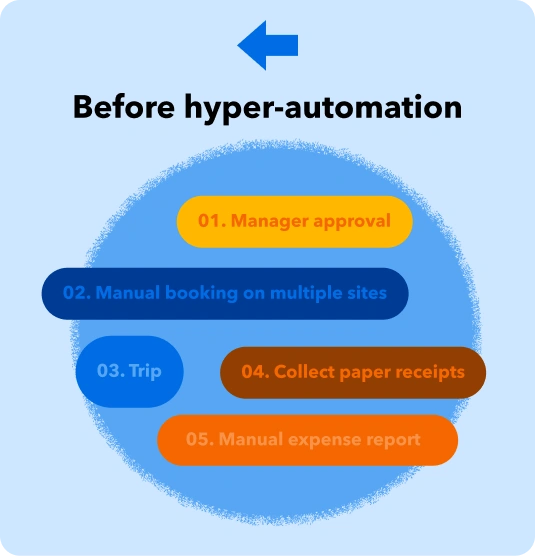
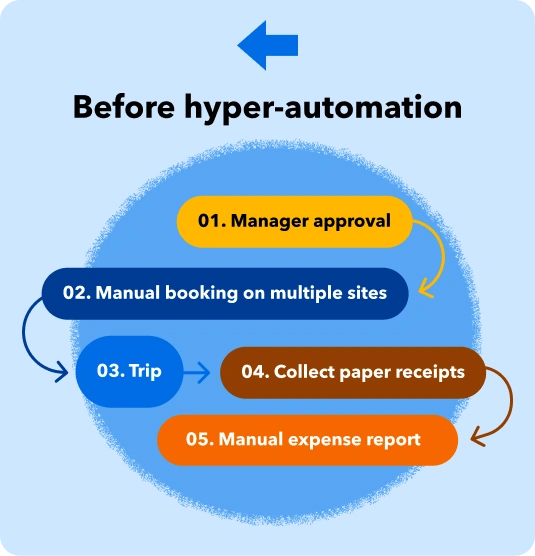
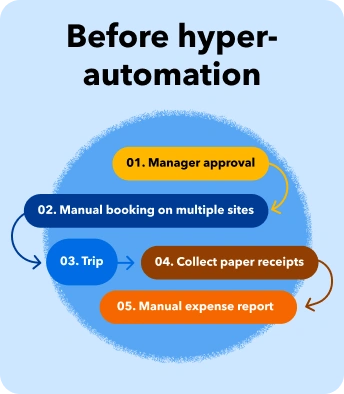
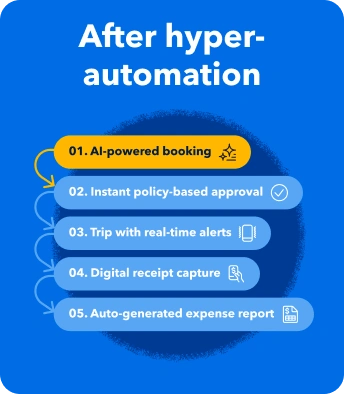
Only a few years ago, managing work trips involved multi-step processes with many manual touchpoints. With the arrival of digital travel platforms, businesses have benefitted from more choice, faster bookings, automated approvals and real-time expense management in one place. Now we’re entering the era of hyper-automation.
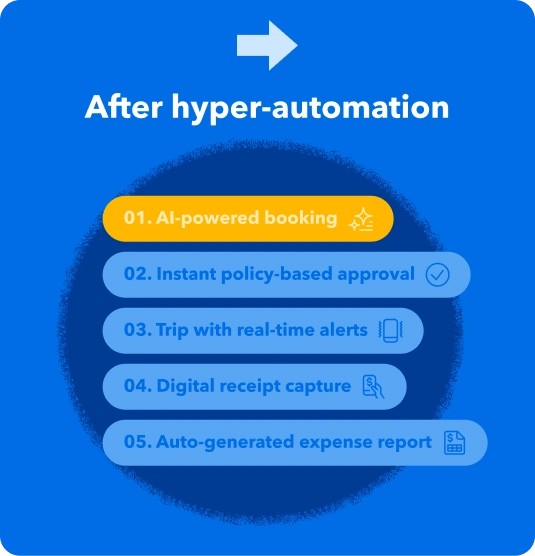
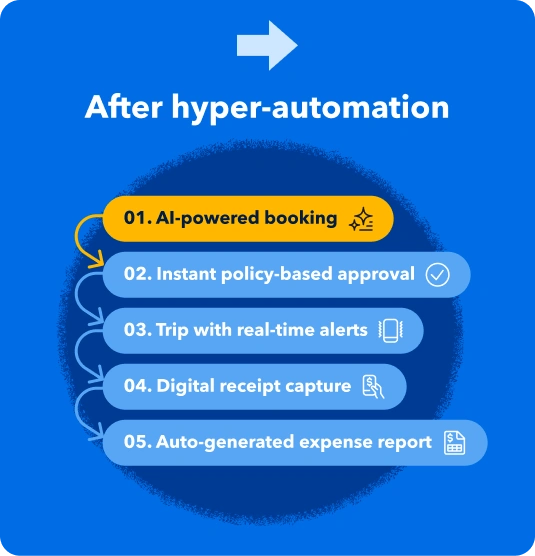
Hyper-automation combines AI, machine learning and robotic process automation to handle complex processes with minimal human intervention. In relation to business travel, AI-driven tools will learn from your company’s booking, approval and reimbursement patterns.
Then these tools can do game-changing things to make business travel more efficient. Such as automatically re-booking a hotel if a cheaper rate becomes available. Or flagging out-of-policy spend instantly. And reducing the manual work involved in expense claiming because everything is captured and matched automatically.
How to get your business travel programme ready for hyper-automation
- Centralise data in one platform to create the foundation that hyper-automation systems can learn from.
- Create clear, consistent travel policies that can be easily translated into automated rules.
- Define what good travel programme performance looks like so you can measure the impact of automation investments.

06. Biometric borders
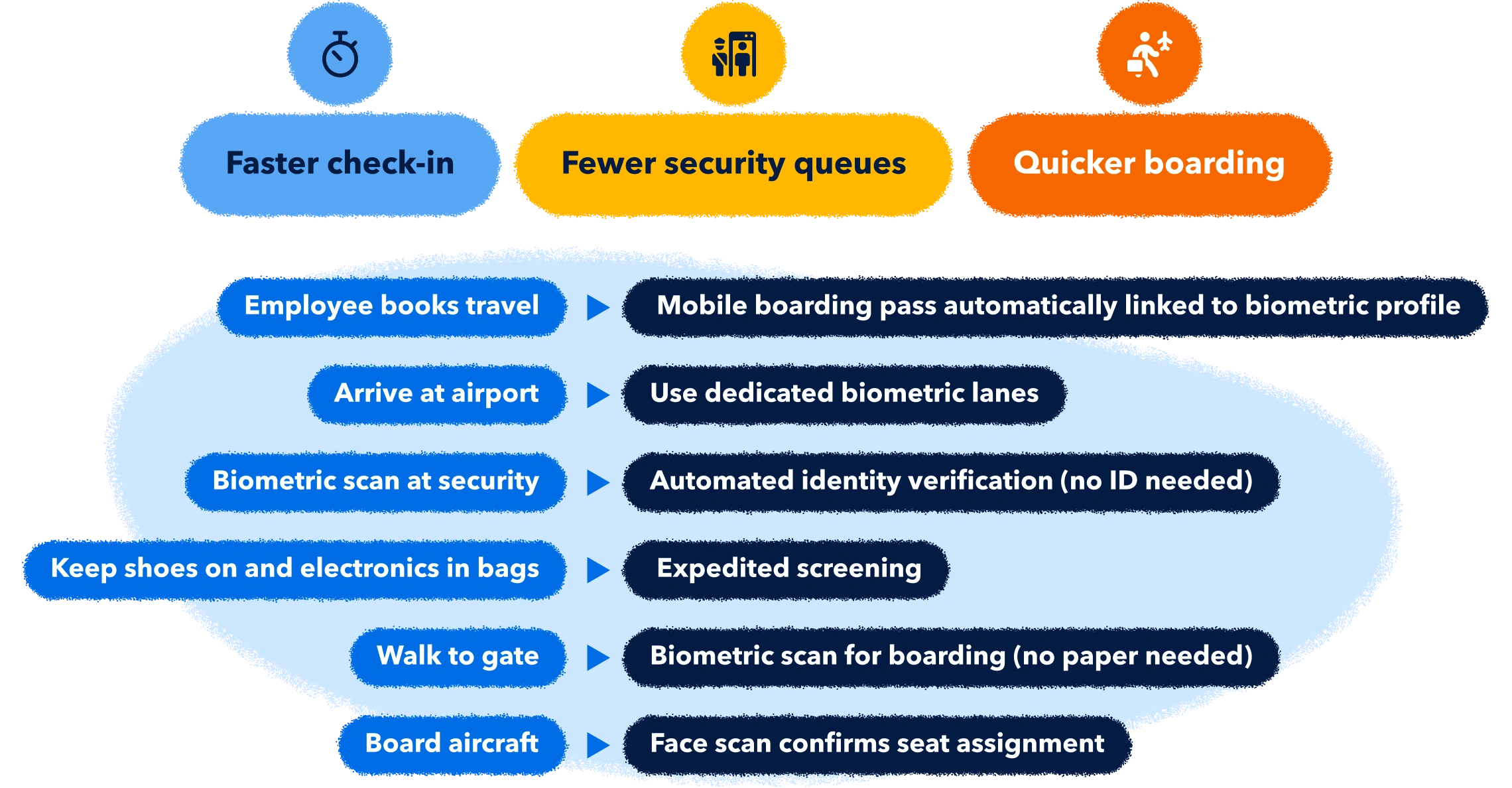
The airport experience will be changing rapidly as digital border control processes are implemented around the world.
For instance, the EU’s new Entry/Exit system will be fully operational by April 2026. [11] Physical passport stamps will be phased out in favour of biometric checks, and passengers will scan their fingerprints and faces for more secure, faster border controls.
Singapore’s Changi Airport is on track to automate 95% of immigration processing by 2026.[12] And in the US, travellers can add their acceptable driver’s licence or ID to their phone wallet for faster, more secure scanning at 250+ airports. [13]
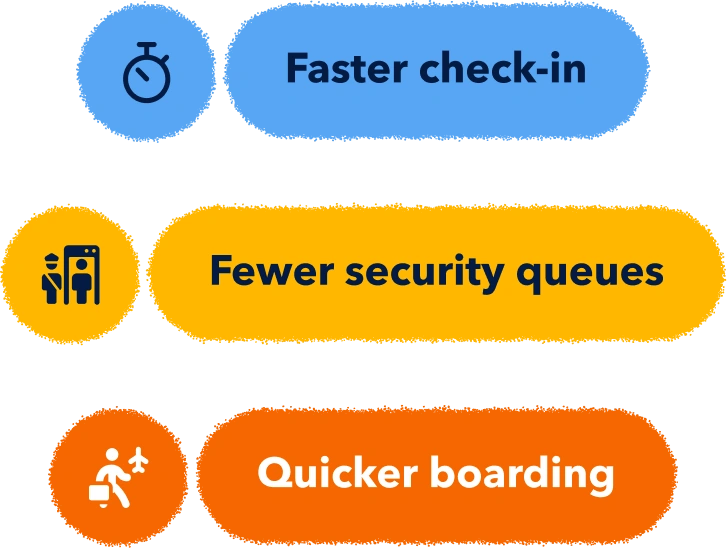
With this digitisation, business travellers will hopefully benefit from less pre-trip paperwork, quicker security queues and smoother travel overall.
What biometric borders mean for your travel programme
- Update your travel policy to address biometric programme participation and requirements.
- Create training material to help your team understand biometric travel options, enrolment processes and privacy implications.
- Evaluate your business travel booking and expense management systems to make sure they can accommodate new travel document types and processes.
- Include biometric programme enrolment fees in your travel budget.















07. Rewards without the runaround
When today’s business traveller considers travel loyalty programmes, they’re led by practical incentives. Discounted travel opportunities and ease of redeeming points rank higher than brand loyalty as reasons to enrol. [14]
And it’s not just about getting the best price. Business travellers also want digital convenience and immediate perks, without complex points tracking systems. Waiting too long to collect points and convert them into tangible rewards will cause them to turn elsewhere.
Tailored offers also pay off, with 78% of consumers increasing repeat purchases when presented with personalised experiences.[15] With real-time data, AI and machine learning capabilities, loyalty programmes will be able to create even more customised rewards for their members.
It’s this practicality, immediacy and personalisation that will keep business travellers engaged with loyalty programmes, and with the platforms or companies that offer them.
How to make the most of loyalty programmes for your team and business travel programme
- Don’t lock your team in. Offer access to multiple loyalty programmes that actually meet their needs and benefit the company.
- Highlight programme benefits upfront and often to encourage travellers to take advantage of perks and rewards.
- Be sure that rewards can be accessed with minimal steps, ideally within your booking platform.

Discounted
travel
travel

Digital
convenience
convenience

Tailored
offers
offers

Easy
redemption
redemption
Discounted
travel
travel
Digital
convenience
convenience
Tailored
offers
offers
Easy
redemption
redemption

Make business travel more rewarding
Earn Genius discounts of up 20% and rewards like free breakfasts and room upgrades – all in the Booking.com for Business platform
 We believe successful business travel combines consumer-level simplicity, ease and rewards with financial discipline: Clear policies, flexible options and technology that removes friction. When you design trips that respect employee time, company budget and traveller wellbeing, you can transform business from a cost centre into a growth channel for generating revenue and building stronger teams. That’s the opportunity this trend report points to, and it’s within reach for every SME.
Joshua Wood
Director of Booking.com for Business

Nadine Blokker
Head of Sales & Marketing, Booking.com for Business

100% free for the whole team
Pay no setup, booking or pricing plan fees and save with Genius discounts of up to 20% and rewards like free breakfasts

Quick and easy bookings
Enjoy a world of choice and flexibility for flights, stays and car rentals. Get personalised recommendations to save time

Invite and manage the whole team
Everyone can use the platform, and you can assign permissions, set hotel budgets and specify payment methods

Gain better oversight
Monitor traveller locations in case anyone needs help, and track and report on spend for better forecasting and decision making
100% free for the whole team
Pay no setup, booking or pricing plan fees and save with Genius discounts of up to 20% and rewards like free breakfasts
Quick and easy bookings
Enjoy a world of choice and flexibility for flights, stays and car rentals. Get personalised recommendations to save time
Invite and manage the whole team
Everyone can use the platform, and you can assign permissions, set hotel budgets and specify payment methods
Gain better oversight
Monitor traveller locations in case anyone needs help, and track and report on spend for better forecasting and decision making